ytstudioyoutube . com is an unofficial domain that mimics YouTube Studio. The site looks like a familiar dashboard. The site may try to collect login details or install software. Readers should learn the differences between the official YouTube Studio and copycat pages. The goal is to help people spot risks and protect accounts quickly.
Key Takeaways
- YTStudioYouTube.com is a fake site mimicking the official YouTube Studio to steal login credentials and install malware.
- Always verify the domain name as studio.youtube.com before entering login details to avoid phishing attempts.
- Look out for red flags such as non-Google URLs, direct password requests, poor grammar, and unusual payment demands on unofficial YouTube Studio sites.
- If you visited ytstudioyoutube.com and entered credentials, immediately change your Google account password and review authorized apps and account activity.
- Enable two-factor authentication with an authenticator app and remove unknown browser extensions to bolster channel security.
- Report suspicious sites to Google Safe Browsing and relevant authorities to help protect the YouTube creator community.
What YTStudioYouTube.com Is, How It Differs From Official YouTube Studio, And Why It Appears
YTStudioYouTube.com is a third-party domain that copies the look of Google’s YouTube Studio. Scammers create pages like ytstudioyoutube . com to trick creators into entering account details. The site may host fake login forms, prompts to install apps, or requests for two-factor codes. They may claim to offer extra analytics, faster monetization, or free features that YouTube does not provide.
The official YouTube Studio lives on studio.youtube.com and integrates with Google account authentication. Google uses OAuth, verified SSL certificates, and consistent domain names. YTStudioYouTube.com uses a different domain, different SSL owners, and often inconsistent page elements. The copy may load slower, show mismatched icons, or use poor grammar. Those signs can help people tell the pages apart.
Threat actors register domains like ytstudioyoutube . com for a few reasons. They want credentials to take over channels and drain revenue. They want to push malware, keyloggers, or browser extensions that capture data. They also sell access to compromised channels on underground markets. Some pages impersonate YouTube to solicit payments for fake services, such as channel audits, ad credits, or expedited verification.
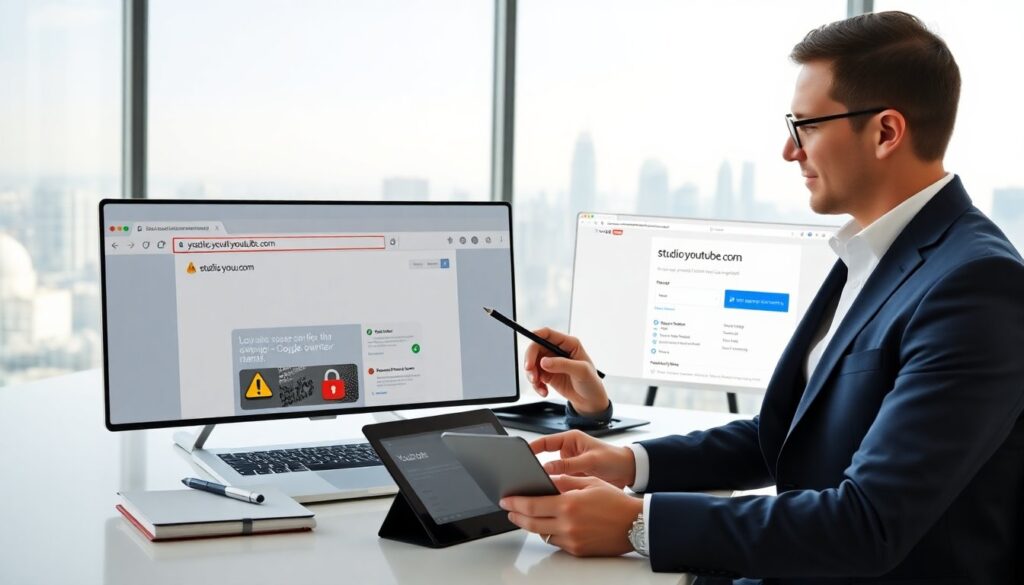
A mistake many people make is trusting a site based on visual similarity alone. The visual match can feel convincing. Yet the domain is the real identifier. Users should check the browser address bar. They should verify the domain against studio.youtube.com before entering any login details. If a page asks to enter a Google password directly rather than redirecting to accounts.google.com, it likely wants to steal credentials.
YTStudioYouTube.com may also appear in search results, social posts, or links sent via messages. Attackers use SEO tricks, forum posts, and paid ads to push the site higher in search. They may register multiple similar domains and rotate them if one gets blocked.
Security Risks And Red Flags To Watch For With Unofficial YouTube Domains
Unverified domains like ytstudioyoutube . com carry clear risks. They can capture passwords, steal session cookies, and bypass two-factor authentication with social engineering. They can prompt users to install browser extensions that request broad permissions. Those extensions can read all web traffic and inject code into pages. Attackers use the access to post videos, change monetization settings, or remove channel owners.
Common red flags include direct password prompts, non-Google login URLs, and requests for payment via gift cards or cryptocurrency. Other signs include typos in page text, outdated graphics, unusual pop-ups, and nonstandard SSL certificate owners. If a page asks for verification codes by text or email and then requests those codes be entered into the same form, the user likely faces an active phishing attempt.
Browser tools and system checks help spot fraud. The browser will show the certificate owner when users click the padlock. The certificate should list Google LLC for official Google properties. Users can check the URL bar for any extra words around “youtube”. Attackers add prefixes or suffixes, such as ytstudioyoutube . com or youtube-studio-login.example. Those variations are not official.
Security experts recommend layered defenses. They advise using a password manager to auto-fill only on the correct domain. They advise turning on Google’s Advanced Protection if the channel has high value. They advise limiting admin access for team members and using separate accounts for sensitive tasks. Regularly reviewing account activity and authorized apps can reveal unknown access points.
Third-party sites may claim to speed up verification or boost views. Users should treat those claims as warnings. YouTube does not require external services for channel verification or monetization review. If a site demands channel keys, OAuth grants, or direct account passwords, the user should assume it will misuse them.
H3: Immediate Steps To Take If You Visited The Site Or Entered Credentials
If someone visited ytstudioyoutube . com and entered credentials, they should act fast. First, they should change their Google account password on accounts.google.com using a secure device. They should revoke site access under Google Account > Security > Third-party apps with account access. They should remove any unknown browser extensions and run a reputable malware scan.
Next, they should enable two-factor authentication using authentication apps rather than SMS where possible. They should review recent account activity for logins from unknown locations. If the attacker changed channel settings, they should document the changes and contact YouTube Support immediately through the Creator Support channels.
If the attacker requested payment, users should report the incident to local authorities and to the payment provider. If the account lost funds or assets, users should collect timestamps, messages, and screenshots to support recovery requests. Users should also warn team members and rotate any shared credentials.
Finally, they should report the malicious domain. Reporting to Google Safe Browsing, to the hosting provider, and to domain registrars can help take the site offline. Community reports on forums and platform support channels can alert other creators quickly. Acting fast reduces the chance of further damage and helps recover control of the channel.